

Technology continues to change the way people work, communicate, travel, study, entertain themselves, and manage everyday responsibilities. New gadgets appear regularly, offering improvements in convenience, performance, portability, connectivity, and entertainment. For people who enjoy discovering useful technology, understanding new devices before making a purchase can be valuable. Zardgadjets can be viewed as a topic centered on exploring the changing gadget landscape and understanding how modern technology fits into everyday life. From smartphones and laptops to smart home equipment, wearable devices, gaming accessories, audio products, and innovative digital tools, the world of gadgets has become broader than ever.
The popularity of technology is not simply about owning the newest device. A useful gadget should solve a problem, save time, improve productivity, provide entertainment, or make a routine activity easier. This is why readers increasingly look beyond specifications and focus on practical value. A modern technology guide can help people compare features, understand important terms, recognize useful innovations, and make more informed decisions. By approaching gadgets from a practical perspective, users can avoid unnecessary purchases while discovering devices that genuinely improve their daily routines.
What Is Zardgadjets?
Zardgadjets represents an approach to discovering and understanding modern gadgets and technology trends. The subject can cover a wide variety of electronic products, including mobile devices, computers, smart accessories, home technology, entertainment equipment, and emerging digital products. Instead of looking at technology only as a collection of specifications, the concept encourages readers to consider how a device performs in real-world situations.
The gadget market changes quickly because manufacturers continually introduce improved processors, displays, cameras, batteries, wireless technologies, sensors, and software features. As a result, buyers can easily become overwhelmed by competing products. A structured approach makes the process simpler. Readers can begin by identifying their needs, comparing important specifications, considering reliability, and evaluating whether a feature provides meaningful benefits. This makes technology discovery more practical rather than simply following every new product announcement.
Why Modern Gadgets Matter
Modern gadgets have become important because they combine several functions into increasingly compact devices. A smartphone, for example, can serve as a communication tool, camera, navigation device, entertainment center, payment instrument, productivity assistant, and information source. Similarly, laptops and tablets can support education, business, creative work, entertainment, and communication from almost anywhere.
Smart home devices have also changed household routines. Connected lighting, security equipment, smart speakers, thermostats, cameras, and appliances can be controlled through applications or voice commands. Wearable technology adds another layer by providing convenient access to notifications, communication, navigation, and activity information. These developments demonstrate that gadgets are no longer limited to entertainment. They increasingly support practical tasks and connected lifestyles.
Major Gadget Categories to Explore
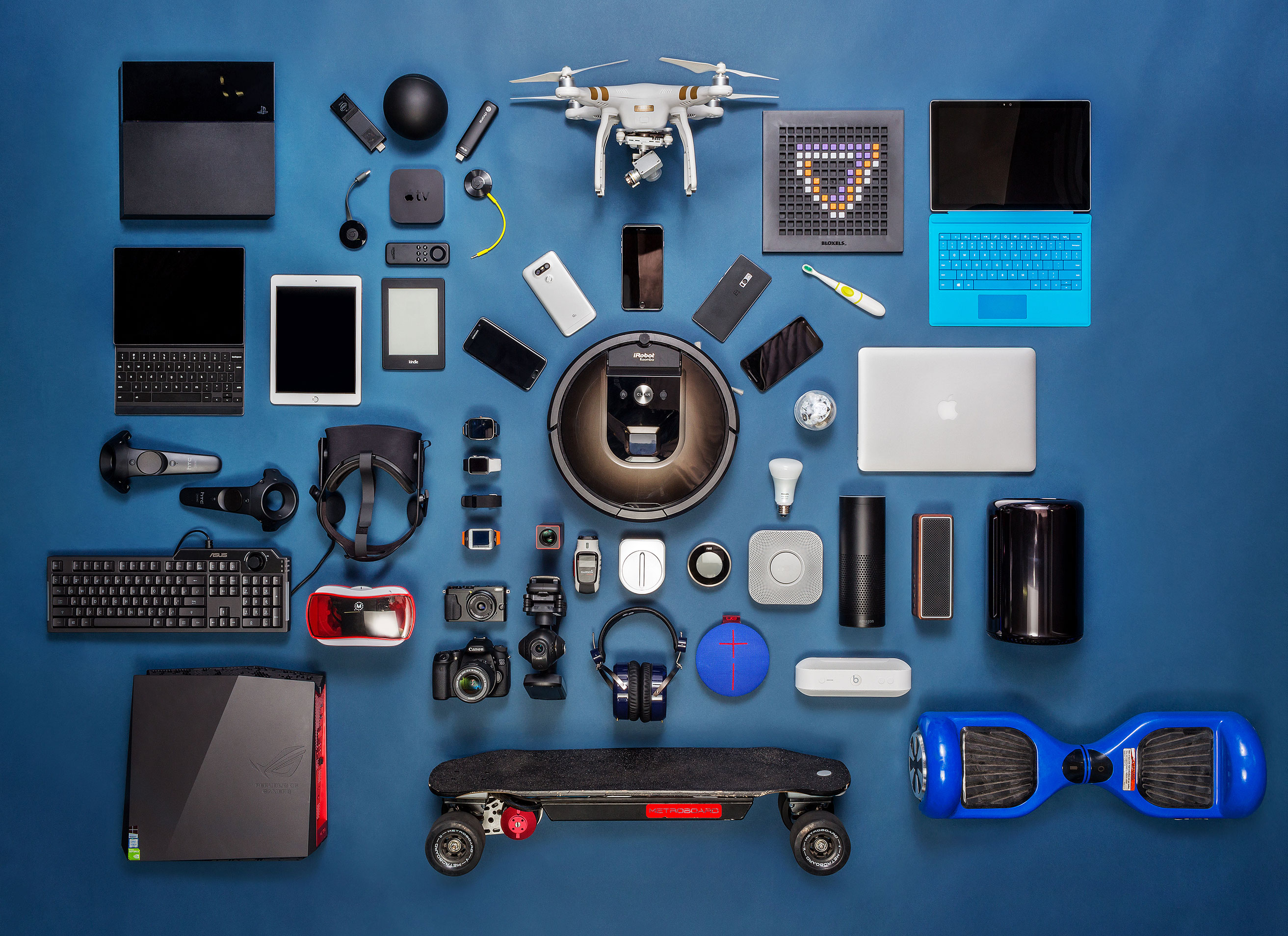
The modern technology market can be divided into several broad categories. Understanding these categories makes it easier to identify products that match particular needs.
| Gadget Category | Common Examples | Main Benefits |
|---|---|---|
| Smartphones | Flagship and budget phones | Communication, photography, apps |
| Laptops | Ultrabooks and performance laptops | Work, study, creativity |
| Wearables | Smartwatches and fitness devices | Convenience and notifications |
| Smart Home | Lights, cameras, speakers | Automation and control |
| Audio | Earbuds, headphones, speakers | Music and communication |
| Gaming | Consoles, controllers, accessories | Entertainment and gaming |
| Tablets | Compact and large-screen tablets | Reading, work, media |
| Accessories | Chargers, hubs, keyboards | Convenience and connectivity |
Each category serves a different purpose. A person who works remotely may prioritize a dependable laptop, comfortable keyboard, high-quality webcam, and reliable connectivity. Someone interested in entertainment may focus more on display quality, speakers, headphones, or gaming equipment. The best gadget is therefore not necessarily the most expensive or technically advanced model; it is the product that matches the user’s actual requirements.
Smartphones and Mobile Technology
Smartphones remain one of the most influential gadget categories. Modern models combine powerful processors, high-resolution displays, advanced cameras, wireless connectivity, security features, and extensive software ecosystems. Improvements in computational photography have made smartphone cameras increasingly capable, while faster wireless networks have improved streaming, communication, and online services.
When evaluating a smartphone, buyers should consider more than camera megapixels or processor names. Battery endurance, software support, display quality, storage, charging speed, durability, and overall usability can have a greater effect on everyday satisfaction. A balanced device with dependable performance can often be more useful than a model that has one exceptional feature but compromises in other areas.
Laptops and Productivity Devices
Laptops remain essential for students, professionals, creators, and home users. Improvements in processors have made modern portable computers capable of handling demanding workloads while maintaining better efficiency. Lightweight designs are particularly useful for people who frequently move between workplaces, classrooms, homes, and travel locations.
Before buying a laptop, users should consider the type of work they perform. Basic browsing and document editing require different hardware from video editing, software development, engineering applications, or gaming. Memory, storage, display resolution, keyboard quality, battery life, ports, and portability should all be considered together. Zardgadjets can therefore be approached as a useful technology topic for understanding these differences and identifying which features matter for different users.
Wearable Technology
Wearable gadgets have grown from simple accessories into sophisticated technology products. Smartwatches and other wearable devices can provide notifications, communication features, navigation, timers, music controls, and other convenient functions. Their compact design allows users to access information without constantly reaching for a smartphone.
The value of a wearable device depends heavily on compatibility and daily habits. A person who frequently checks notifications may benefit from a smartwatch, while another user may prefer a simpler wearable focused on convenience. Battery life, comfort, durability, display visibility, software compatibility, and charging requirements are important considerations. Wearables are most useful when their features support everyday routines instead of becoming unnecessary distractions.
Smart Home Gadgets
Smart home technology has become increasingly accessible. Connected bulbs, plugs, cameras, sensors, speakers, thermostats, and appliances can work together to create more convenient household environments. Automation can help users schedule lighting, monitor spaces, manage devices, and control certain functions remotely.
However, convenience should be balanced with security and privacy. Connected products can collect information or communicate over wireless networks, so users should pay attention to account protection, software updates, permissions, and network security. Choosing established products with clear security practices can be an important part of responsible smart home adoption.
Gaming and Entertainment Gadgets
Gaming technology continues to advance through improved graphics, faster displays, immersive audio, portable devices, and specialized accessories. Consoles and gaming computers remain popular, while handheld gaming devices provide additional flexibility for users who want to play away from a traditional setup.
Accessories can also influence the overall gaming experience. Controllers, keyboards, mice, headsets, monitors, storage devices, and ergonomic furniture can improve comfort and usability. Buyers should focus on compatibility and personal requirements rather than purchasing every available accessory. A well-balanced setup can provide a better experience than an expensive collection of unnecessary equipment.
Audio Gadgets and Wireless Accessories
Audio technology has changed significantly with the development of wireless earbuds, noise-canceling headphones, portable speakers, and advanced microphones. These products are useful for music, video calls, gaming, travel, studying, and entertainment.
Sound quality remains important, but comfort, battery life, microphone performance, connectivity, controls, and durability should also be considered. Noise cancellation can be particularly useful for commuters and people working in busy environments. For everyday users, convenience may be just as important as advanced audio specifications.
How to Choose the Right Gadget
Selecting technology should begin with a clear understanding of the intended purpose. Before purchasing a product, users can ask a few simple questions:
- What problem should the gadget solve?
- How frequently will it be used?
- Which features are genuinely important?
- Is it compatible with existing devices?
- How long is it expected to remain useful?
- Does the price match its practical value?
These questions can prevent impulse purchases. A product may look impressive because of its specifications, design, or promotional features, but that does not automatically make it suitable for every person. Practical requirements should remain the primary consideration.
Specifications That Deserve Attention
Technology specifications can sometimes appear complicated, but a few common categories are particularly useful. Processor performance influences how quickly a device handles applications and demanding tasks. RAM affects multitasking, while storage determines how much data, applications, photos, videos, and files can be kept locally.
Battery capacity and efficiency influence how long portable devices can operate between charges. Display technology affects visual quality and comfort, while connectivity determines compatibility with networks and accessories. Zardgadjets can be explored effectively by looking at these specifications in context rather than treating individual numbers as the entire story.
Balancing Price and Value
A common mistake when purchasing technology is assuming that the most expensive option is automatically the best choice. Premium devices often provide advanced materials, stronger performance, additional features, or longer software support, but those benefits may not matter to every user.
Budget-friendly products can provide excellent value when they deliver the essential functions reliably. Mid-range products can sometimes offer an attractive balance between price and performance. The right choice depends on how the gadget will be used and how important advanced features are to the buyer. Comparing total value rather than focusing only on the initial price can lead to better purchasing decisions.
Future Trends in Gadget Technology
The future of gadgets is likely to involve greater connectivity, improved artificial intelligence capabilities, energy efficiency, automation, and more personalized software experiences. Devices are increasingly designed to communicate with one another, creating connected ecosystems across homes, workplaces, vehicles, and personal accessories.
Displays may become more flexible, wearable devices may become more capable, and computing may become increasingly distributed across local hardware and cloud services. Battery improvements and efficient processors could also make portable technology more practical. Zardgadjets provides a useful lens for following these developments because understanding trends can help consumers distinguish meaningful innovation from short-lived hype.
Practical Tips for Gadget Buyers
A thoughtful purchasing process can reduce mistakes and improve long-term satisfaction. Buyers should research before spending money and avoid making decisions solely because a product is trending.
Some useful habits include:
- Compare several products before choosing one.
- Check compatibility with current devices.
- Consider long-term software and security support.
- Read specifications alongside practical reviews.
- Think about repairability, durability, and warranty coverage.
- Avoid paying extra for features that will rarely be used.
These habits are especially helpful in rapidly changing technology categories, where new models can make older products appear outdated even when they still perform perfectly well.
The Importance of Responsible Technology Use
Owning advanced gadgets also requires responsible usage. Keeping software updated, using strong passwords, enabling available security protections, and managing application permissions can reduce unnecessary risks. Users should also think about battery care, electronic waste, recycling, and responsible disposal when replacing older devices.
Technology can provide significant benefits, but excessive dependence on gadgets may create distractions. Setting boundaries around notifications and screen time can help users maintain a healthier relationship with technology. The goal should be to make gadgets serve daily life rather than allowing them to dominate it.
Conclusion
The world of technology continues to expand, giving consumers access to more choices than ever before. Smartphones, laptops, wearables, smart home equipment, gaming devices, audio products, and accessories all offer different benefits. Understanding these categories makes it easier to identify products that provide genuine value rather than simply following the newest trend.
Zardgadjets can be understood as a practical gateway to exploring this constantly changing gadget environment. By comparing features, evaluating real-world usefulness, considering compatibility, and balancing price with long-term value, consumers can make more confident technology decisions. The most useful gadget is ultimately the one that solves a genuine problem, performs reliably, and fits naturally into everyday life. As technology continues to evolve, thoughtful research will remain one of the best tools for choosing devices that are genuinely worth having.